AIPMT/NEET officaial site
The National Eligibility cum Entrance Test or NEET-UG is a entrance examination in India, for students who wish to study any graduate medical course (MBBS), dental course (BDS) or postgraduate course (MD / MS) in government or private medical colleges in India.NEET-UG (Undergraduate), for MBBS and BDS courses, will be conducted by the Central Board of Secondary Education (CBSE). NEET-UG replaced the All India Pre Medical Test (AIPMT) and all individual MBBS exams conducted by states or colleges themselves. However, many colleges and institutes have taken a stay order and conducted private examinations for admission to their MBBS and BDS courses.
Undergraduate courses at the All India Institute of Medical Sciences in New Delhi, Postgraduate Institute for Medical Education and Research in Chandigarh, Jawarharlal Institute of Postgraduate Medical Education & Research JIPMER are outside the NEET’s purview, as these institutes were set up by separate laws.
History
NEET was initially proposed to take place from 2012 onwards.[2] However, for several reasons, the CBSE & Medical Council of India deferred NEET by a year.[3] The test was announced by the Government of India and was held for the first time on 5 May 2013 across India for students seeking admission for both Undergraduate and Postgraduate Medicine.[4] But on 18 July 2013, SC gave the decision in favour of 115 petitions and cancelled the NEET exam and announced that MCI could not interfere with the admission process done by colleges.
Following the announcement from the Medical Council of India that it would introduce the NEET-UG exam in 2012, several states including Andhra Pradesh, Karnataka, Gujarat, West Bengal & Tamil Nadu strongly opposed the change, stating that there was a huge variation in the syllabus proposed by the MCI & their state syllabi.[5] These states' representatives have also expressed their inability to accept the presentation of the NEET-UG in only English and Hindi. Students who wish the Test to be in their vernacular language may have this arranged.[6]
The Supreme Court of India quashed the National Eligibility cum Entrance Test (NEET) for admissions into all medical and dental colleges on 18 July 2013. The apex court ruled that the Medical Council of India cannot conduct a unified examination.[7]
According to a 2013 announcement by CBSE,[8] CBSE planned to conduct AIPMT on 4 May 2014.[9] The final decision on NEET UG was planned to be taken after the verdict of the Supreme Court of India.
The Central Board of Secondary Education announces the results and the All India Merit List for NEET-UG. The merit list and the wait-list are prepared as per the directives of the Supreme Court of India, DGHS, MCI and DCI. The results for 2013 were announced on 5 June.[10]
NEET, was declared illegal and unconstitutional by Supreme Court of India in 2013. However, it was restored on April 11 2016, after a five-judge Constitution bench recalled the earlier verdict and allowed the Central Government and the Medical Council of India (MCI) to implement the common entrance test till the court decides afresh on its validity.
Phase One Test
The All India Pre Medical Test also known as AIPMT, to be held on May 1, 2016, would be considered as first phase of the NEET. Students who have registered for Phase One will be given a chance to appear for the next phase of NEET to be held on July 24, 2016 but with a condition that candidates have to give up their NEET Phase 1 score.[11] The above dates are as per the order of Supreme Court
[12]
Syllabus
The Medical Council of India (MCI) announced the syllabus[13] for the NEET-UG in 2011. The syllabus had been initially published as a draft to invite feedback from other stakeholders. The syllabus for NEET-PG is the same as that of the MBBS course described in the MCI Regulations concerning Graduate Medical Education, 1997. The multiple choice questions (MCQs) will be based on the MBBS syllabus, as will the knowledge that needs to be acquired during the internship period, which is also described in said Regulations. The distribution of questions, model questions and method of tie breaking for ranking have been placed on the website, as well as in the Prospectus.[14]
NEET Undergraduate
The Undergraduate NEET exam was conducted by the Central Board of Secondary Education, and held for the first time on 5 May 2013.[15][16][17] With regards to the marking, each correct answer achieves four marks, with one mark being deducted for every wrong answer.[18][19]
NEET Postgraduate
The Common Entrance Test (CET), also known as the NEET Postgraduate exam, is for admission to postgraduate medical courses across India. It was held online during 23 November – 6 December 2012.[20] The All India Institute of Medical Sciences (AIIMS) will conduct a separate medical entrance test for MDS courses on 13 January 2013.[21]
All India Pre Medical Test
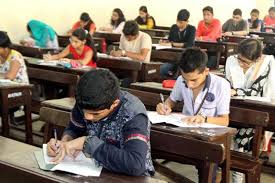
The All India Pre-Medical / Pre-Dental Entrance Test (AIPMT now neet)[1] is an annual medical entrance examination in India.[2] The exam is conducted by the Central Board of Secondary Education (CBSE), Delhi for admission to MBBS and BDS courses in several medical colleges across the country. At present, 15% of the total seats in all medical and dental colleges run by the Union of India, state governments, municipal or other local authorities in India, except in the states of Andhra Pradesh, Telangana and Jammu and Kashmir, are reserved for candidates who qualify this examination.
Conduct
The primary aim of this test, which is standardized all over India, is to make medical education available on an equitable basis to all regions of the nation and to foster inter-regional exchange. Until 2006, the AIPMT was unusual as it was one of the few all-India competitive examinations (along with the examinations for the defense services) based completely on merit and without any reservations. However, from 2006, under pressure from the Human Resources ministry headed by Arjuna Singh, reservation for SC, ST and OBC has also been introduced in AIPMT.
Every Year AIPMT is conducted on first Sunday in the month of May.
In 2016, AIPMT was conducted on 1 May 2016.[3]

Exam pattern
Exam changes
In 2010, the pattern of AIPMT was changed. The examination was replaced by a Two tier or Two stage test – The AIPMT Prelims and the AIPMT Mains. The candidates who could qualify the AIPMT Prelims were eligible to give the AIPMT Mains test. Finally, those who scored good in the AIPMT Mains were selected for admission based purely on the merit of the candidate in the AIPMT Mains. Admission was done rank-wise
In 2013, the pattern changed again - The Two tier examination was replaced by the National Eligibility cum Entrance Test (NEET-UG).[4] It was a nationwide test through which admissions were to be done for all seats of MBBS and BDS in all the colleges which were covered by previous exam.
From 2014 onwards, the Exam was named as AIPMT again, and is done for 15% seats only, as was done earlier to National Eligibility cum Entrance Test (NEET-UG). See current exam pattern below for more details.
Current exam pattern
The exam is conducted in a single stage that usually occurs on the first Sunday of May.[5] The examination consists of one paper containing 180 objective type questions from Physics, Chemistry and Biology (Botany & Zoology), having 45 questions from each subject. The exam duration is 3 hours. Each question carries 4 marks. For each incorrect response, one mark is deducted from the total score. However, no deduction from the total score is made if no response is indicated for an item. Indication of more than one answer for a question is deemed an incorrect response and negatively marked.
AIPMT registration over time
The approximate number of registrations in the past two years are shown by the following graph:
Number of registrations in AIPMT over two years
Year Approximate number of registrations
2015
632,620
2014
616,982
Number of Candidates for AIPMT over time
The approximate number of candidates appearing in the past two years are shown by the following graph:
Number of candidates for AIPMT over two years
Year Approximate number of candidates
2015
374,386
2014
523,701
AIPMT participating states and institutions
In 2015, 9 states and 4 medical institutions participated in AIPMT for filling their MBBS and BDS seats. The list of AIPMT 2015 participating states and institutions are:
Participating states
Andaman & Nicobar
Arunachal Pradesh
Haryana
Himachal Pradesh
Madhya Pradesh
Manipur
Meghalaya
Odisha
Rajasthan
In 2016, 8 states are participating in AIPMT:
Haryana
Himachal Pradesh
Madhya Pradesh
Manipur
Meghalaya (subject to confirmation)
Odisha
Rajasthan
Chandigarh (UT)
Participating institutes
Armed Force Medical Services (Armed Forces Medical College (India)) [6]
Banaras Hindu University [7]
Jamia Hamdard University [8]
University of Delhi[9]
Reservation
(a) 15% seats are reserved for SC candidates,
(b) 8% seats are reserved for ST candidates,
(c) 27% seats are reserved for non-creamy layer OBC candidates [10]
Criticism
AIPMT is criticized for being conducted only in English and Hindi, making it harder for students where vernacular languages such as Tamil, Telugu, Marathi or Gujarati are more prominent. As an example, in September 2011, the Gujarat High Court acted on Public Interest Litigation by the Gujarati Sahitya Parishad for conducting the exams in Gujarati.[11] A second petition was made in October 2011.[12]
AIPMT 2015, 2016 : The banning of scarfs' controversy
The AIPMT in 2015 had listed scarfs in banned items' list, creating controversy and outrage especially in the state of Kerala, where in a nun was refused to appear for the test as she refused to remove her headgear. This comes after the Supreme Court upheld the CBSE's banning.[13] The Kerala HC had permitted two Muslim girls to wear a headscarf and a full-sleeve dress on the condition that they be frisked had the invigilator deemed necessary. However, in the case of Sister Seba, the official had disallowed even while she ready for any frisking.[14]
The AIPMT kept the same norm in its 2016 instructions, sparking protests by the Campus Front of India in front of the CBSE office in Kerala on 13 April. The subsequent protest led to the detention of several girl protesters.[15] Thus CBSE challenged a Kerala High Court single bench order and granted permission to Muslim girls to wear the Hijab for All India Pre-Medical Test 2016[16] Justice Muhammed Mushtaq had permitted all candidates who want to wear headscarf and full sleeved length dress to appear for the examination but on a condition that they would be present at the hall half an hour before the exam for frisking,if necessary by women invigilators[17] The order was issued while hearing a write petition by one Amnah Binth Basheer for changing the dress code[18]
AIPMT 2015 paper leak
In AIPMT 2015 (3 May 2015), Haryana (Rohtak) police caught four people, including two dentists and an MBBS student, from Rohtak for allegedly passing on answer keys of AIPMT 2015 Exam to candidates during the exam, using vests with SIM card units and Bluetooth enabled earpieces.[19] According to the CBSE, the Examination results were earlier scheduled to be declared on 5 June 2015, but due to Supreme Court's stay order on declaration, the results were not announced. The Supreme Court had asked Haryana Police to investigate the matter and identify the beneficiaries as soon as possible. Approximately 6.3 lakh students had appeared for the examination which was conducted on 3 May 2015. Later, the results were rescheduled to be declared on June 12, 2015. On 15 June 2015 the Supreme Court asked CBSE to re-conduct the AIPMT 2015 Exam within 4 weeks (by 12 July 2015). After a hearing on the pleas of CBSE, Supreme Court had decided to re-conduct exam on 25 July 2015. The exam was conducted safely and successfully across the country on the scheduled date (25 July 2015). The result of Re-AIPMT was declared on 18 August 2015.[20]
| [hide]
Standardised test in India
|
|
| Service |
|
|
| Admissions |
|
|
| State level |
|
|
| Misc |
|
|
cool science experiments ( learning by doing )
hack amazon now
free adfly, adly, paypal bot
 Exam pattern
Exam changes
In 2010, the pattern of AIPMT was changed. The examination was replaced by a Two tier or Two stage test – The AIPMT Prelims and the AIPMT Mains. The candidates who could qualify the AIPMT Prelims were eligible to give the AIPMT Mains test. Finally, those who scored good in the AIPMT Mains were selected for admission based purely on the merit of the candidate in the AIPMT Mains. Admission was done rank-wise
In 2013, the pattern changed again - The Two tier examination was replaced by the National Eligibility cum Entrance Test (NEET-UG).[4] It was a nationwide test through which admissions were to be done for all seats of MBBS and BDS in all the colleges which were covered by previous exam.
From 2014 onwards, the Exam was named as AIPMT again, and is done for 15% seats only, as was done earlier to National Eligibility cum Entrance Test (NEET-UG). See current exam pattern below for more details.
Current exam pattern
The exam is conducted in a single stage that usually occurs on the first Sunday of May.[5] The examination consists of one paper containing 180 objective type questions from Physics, Chemistry and Biology (Botany & Zoology), having 45 questions from each subject. The exam duration is 3 hours. Each question carries 4 marks. For each incorrect response, one mark is deducted from the total score. However, no deduction from the total score is made if no response is indicated for an item. Indication of more than one answer for a question is deemed an incorrect response and negatively marked.
AIPMT registration over time
The approximate number of registrations in the past two years are shown by the following graph:
Number of registrations in AIPMT over two years
Year Approximate number of registrations
2015
632,620
2014
616,982
Number of Candidates for AIPMT over time
The approximate number of candidates appearing in the past two years are shown by the following graph:
Number of candidates for AIPMT over two years
Year Approximate number of candidates
2015
374,386
2014
523,701
AIPMT participating states and institutions
In 2015, 9 states and 4 medical institutions participated in AIPMT for filling their MBBS and BDS seats. The list of AIPMT 2015 participating states and institutions are:
Participating states
Andaman & Nicobar
Arunachal Pradesh
Haryana
Himachal Pradesh
Madhya Pradesh
Manipur
Meghalaya
Odisha
Rajasthan
In 2016, 8 states are participating in AIPMT:
Haryana
Himachal Pradesh
Madhya Pradesh
Manipur
Meghalaya (subject to confirmation)
Odisha
Rajasthan
Chandigarh (UT)
Participating institutes
Armed Force Medical Services (Armed Forces Medical College (India)) [6]
Banaras Hindu University [7]
Jamia Hamdard University [8]
University of Delhi[9]
Reservation
(a) 15% seats are reserved for SC candidates,
(b) 8% seats are reserved for ST candidates,
(c) 27% seats are reserved for non-creamy layer OBC candidates [10]
Criticism
AIPMT is criticized for being conducted only in English and Hindi, making it harder for students where vernacular languages such as Tamil, Telugu, Marathi or Gujarati are more prominent. As an example, in September 2011, the Gujarat High Court acted on Public Interest Litigation by the Gujarati Sahitya Parishad for conducting the exams in Gujarati.[11] A second petition was made in October 2011.[12]
AIPMT 2015, 2016 : The banning of scarfs' controversy
The AIPMT in 2015 had listed scarfs in banned items' list, creating controversy and outrage especially in the state of Kerala, where in a nun was refused to appear for the test as she refused to remove her headgear. This comes after the Supreme Court upheld the CBSE's banning.[13] The Kerala HC had permitted two Muslim girls to wear a headscarf and a full-sleeve dress on the condition that they be frisked had the invigilator deemed necessary. However, in the case of Sister Seba, the official had disallowed even while she ready for any frisking.[14]
The AIPMT kept the same norm in its 2016 instructions, sparking protests by the Campus Front of India in front of the CBSE office in Kerala on 13 April. The subsequent protest led to the detention of several girl protesters.[15] Thus CBSE challenged a Kerala High Court single bench order and granted permission to Muslim girls to wear the Hijab for All India Pre-Medical Test 2016[16] Justice Muhammed Mushtaq had permitted all candidates who want to wear headscarf and full sleeved length dress to appear for the examination but on a condition that they would be present at the hall half an hour before the exam for frisking,if necessary by women invigilators[17] The order was issued while hearing a write petition by one Amnah Binth Basheer for changing the dress code[18]
AIPMT 2015 paper leak
In AIPMT 2015 (3 May 2015), Haryana (Rohtak) police caught four people, including two dentists and an MBBS student, from Rohtak for allegedly passing on answer keys of AIPMT 2015 Exam to candidates during the exam, using vests with SIM card units and Bluetooth enabled earpieces.[19] According to the CBSE, the Examination results were earlier scheduled to be declared on 5 June 2015, but due to Supreme Court's stay order on declaration, the results were not announced. The Supreme Court had asked Haryana Police to investigate the matter and identify the beneficiaries as soon as possible. Approximately 6.3 lakh students had appeared for the examination which was conducted on 3 May 2015. Later, the results were rescheduled to be declared on June 12, 2015. On 15 June 2015 the Supreme Court asked CBSE to re-conduct the AIPMT 2015 Exam within 4 weeks (by 12 July 2015). After a hearing on the pleas of CBSE, Supreme Court had decided to re-conduct exam on 25 July 2015. The exam was conducted safely and successfully across the country on the scheduled date (25 July 2015). The result of Re-AIPMT was declared on 18 August 2015.[20]
Exam pattern
Exam changes
In 2010, the pattern of AIPMT was changed. The examination was replaced by a Two tier or Two stage test – The AIPMT Prelims and the AIPMT Mains. The candidates who could qualify the AIPMT Prelims were eligible to give the AIPMT Mains test. Finally, those who scored good in the AIPMT Mains were selected for admission based purely on the merit of the candidate in the AIPMT Mains. Admission was done rank-wise
In 2013, the pattern changed again - The Two tier examination was replaced by the National Eligibility cum Entrance Test (NEET-UG).[4] It was a nationwide test through which admissions were to be done for all seats of MBBS and BDS in all the colleges which were covered by previous exam.
From 2014 onwards, the Exam was named as AIPMT again, and is done for 15% seats only, as was done earlier to National Eligibility cum Entrance Test (NEET-UG). See current exam pattern below for more details.
Current exam pattern
The exam is conducted in a single stage that usually occurs on the first Sunday of May.[5] The examination consists of one paper containing 180 objective type questions from Physics, Chemistry and Biology (Botany & Zoology), having 45 questions from each subject. The exam duration is 3 hours. Each question carries 4 marks. For each incorrect response, one mark is deducted from the total score. However, no deduction from the total score is made if no response is indicated for an item. Indication of more than one answer for a question is deemed an incorrect response and negatively marked.
AIPMT registration over time
The approximate number of registrations in the past two years are shown by the following graph:
Number of registrations in AIPMT over two years
Year Approximate number of registrations
2015
632,620
2014
616,982
Number of Candidates for AIPMT over time
The approximate number of candidates appearing in the past two years are shown by the following graph:
Number of candidates for AIPMT over two years
Year Approximate number of candidates
2015
374,386
2014
523,701
AIPMT participating states and institutions
In 2015, 9 states and 4 medical institutions participated in AIPMT for filling their MBBS and BDS seats. The list of AIPMT 2015 participating states and institutions are:
Participating states
Andaman & Nicobar
Arunachal Pradesh
Haryana
Himachal Pradesh
Madhya Pradesh
Manipur
Meghalaya
Odisha
Rajasthan
In 2016, 8 states are participating in AIPMT:
Haryana
Himachal Pradesh
Madhya Pradesh
Manipur
Meghalaya (subject to confirmation)
Odisha
Rajasthan
Chandigarh (UT)
Participating institutes
Armed Force Medical Services (Armed Forces Medical College (India)) [6]
Banaras Hindu University [7]
Jamia Hamdard University [8]
University of Delhi[9]
Reservation
(a) 15% seats are reserved for SC candidates,
(b) 8% seats are reserved for ST candidates,
(c) 27% seats are reserved for non-creamy layer OBC candidates [10]
Criticism
AIPMT is criticized for being conducted only in English and Hindi, making it harder for students where vernacular languages such as Tamil, Telugu, Marathi or Gujarati are more prominent. As an example, in September 2011, the Gujarat High Court acted on Public Interest Litigation by the Gujarati Sahitya Parishad for conducting the exams in Gujarati.[11] A second petition was made in October 2011.[12]
AIPMT 2015, 2016 : The banning of scarfs' controversy
The AIPMT in 2015 had listed scarfs in banned items' list, creating controversy and outrage especially in the state of Kerala, where in a nun was refused to appear for the test as she refused to remove her headgear. This comes after the Supreme Court upheld the CBSE's banning.[13] The Kerala HC had permitted two Muslim girls to wear a headscarf and a full-sleeve dress on the condition that they be frisked had the invigilator deemed necessary. However, in the case of Sister Seba, the official had disallowed even while she ready for any frisking.[14]
The AIPMT kept the same norm in its 2016 instructions, sparking protests by the Campus Front of India in front of the CBSE office in Kerala on 13 April. The subsequent protest led to the detention of several girl protesters.[15] Thus CBSE challenged a Kerala High Court single bench order and granted permission to Muslim girls to wear the Hijab for All India Pre-Medical Test 2016[16] Justice Muhammed Mushtaq had permitted all candidates who want to wear headscarf and full sleeved length dress to appear for the examination but on a condition that they would be present at the hall half an hour before the exam for frisking,if necessary by women invigilators[17] The order was issued while hearing a write petition by one Amnah Binth Basheer for changing the dress code[18]
AIPMT 2015 paper leak
In AIPMT 2015 (3 May 2015), Haryana (Rohtak) police caught four people, including two dentists and an MBBS student, from Rohtak for allegedly passing on answer keys of AIPMT 2015 Exam to candidates during the exam, using vests with SIM card units and Bluetooth enabled earpieces.[19] According to the CBSE, the Examination results were earlier scheduled to be declared on 5 June 2015, but due to Supreme Court's stay order on declaration, the results were not announced. The Supreme Court had asked Haryana Police to investigate the matter and identify the beneficiaries as soon as possible. Approximately 6.3 lakh students had appeared for the examination which was conducted on 3 May 2015. Later, the results were rescheduled to be declared on June 12, 2015. On 15 June 2015 the Supreme Court asked CBSE to re-conduct the AIPMT 2015 Exam within 4 weeks (by 12 July 2015). After a hearing on the pleas of CBSE, Supreme Court had decided to re-conduct exam on 25 July 2015. The exam was conducted safely and successfully across the country on the scheduled date (25 July 2015). The result of Re-AIPMT was declared on 18 August 2015.[20]


Comments
Post a Comment